

Combo Lift: Our Combined Approach to Skin Rejuvenation
Combo Lift is our personalised approach to skin rejuvenation in Ankara, Turkey. It combines three non-surgical methods, with the combination and timing selected after a medical assessment.
The plan addresses individual concerns about skin texture and firmness.
Combo Lift at a Glance
- Approach: a personalised combination of non-surgical medical procedures.
- Methods: radiofrequency microneedling, fractional laser and mesotherapy, selected for suitability.
- Sessions: planned individually and reviewed according to the response.
- Recovery: depends on the methods and intensity used.
How the Combo Lift Treatments Work Together
The three methods in a Combo Lift plan work in different ways: gold needle, fractional laser and mesotherapy.
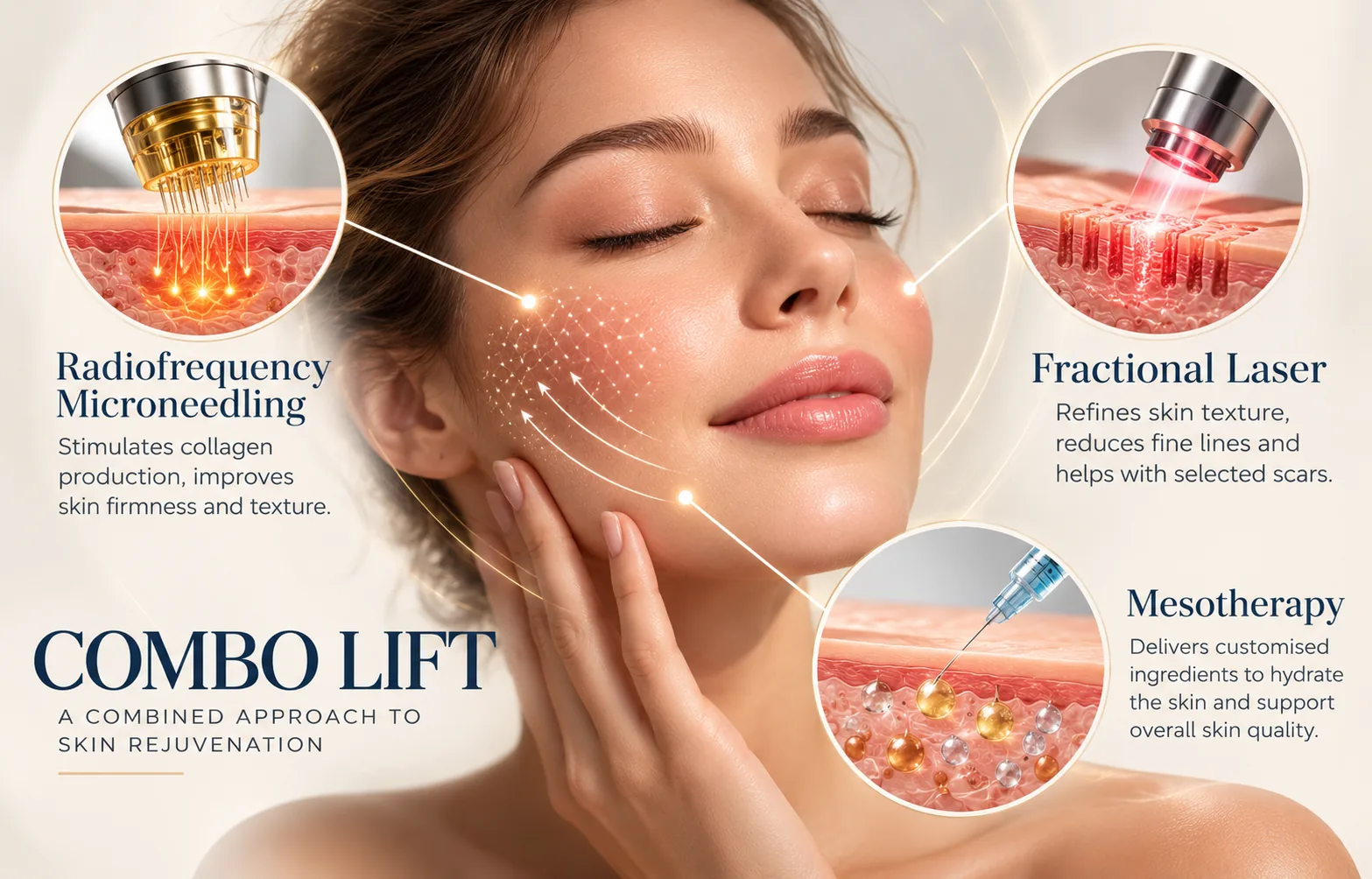
Gold needle, or radiofrequency microneedling, delivers heat into the skin through very fine needles. This encourages collagen remodelling over time and can help with mild looseness and uneven texture.
Fractional laser works differently. It treats small areas of the skin while leaving the surrounding tissue relatively untouched. We sometimes use CO₂ fractional laser, particularly when fine lines, rough texture or certain scars are the main concern. It's a more intensive treatment, though, and it isn't the right choice for every skin type.
Mesotherapy is the third part. It involves injecting selected ingredients into the skin, often with hydration or skin appearance in mind. The ingredients we choose vary from patient to patient, and not every mesotherapy formula has the same level of clinical evidence behind it.
What matters to us is how these treatments fit together. Simply doing all three doesn't automatically give someone a better result. Sometimes we use a gentler combination. Sometimes we separate the treatments to give the skin time to recover.
There isn't one version of Combo Lift that suits everyone.
| Method | Role in the plan | Recovery considerations |
|---|---|---|
| Radiofrequency microneedling | May address mild laxity and uneven texture. | Redness, swelling and sensitivity may occur. |
| Fractional laser | May address surface texture, fine lines and selected scars. | Fractional CO₂ laser treatment may involve peeling, crusting and a longer period of visible recovery. |
| Mesotherapy | Selected according to the ingredients, evidence and individual concern. | Injection-related bruising, irritation and ingredient-related reactions are possible. |
Why Skin Quality Matters
Skin texture and firmness contribute to the overall appearance of the face, alongside its shape and volume.
Skin quality also matters when we're planning aesthetic surgery. We can improve the shape or volume of the face, but the condition of the skin still affects how the result looks. That's why Dr. Erten pays attention to skin texture, elasticity and firmness, even when a patient has come in to discuss a surgical procedure.
How We Plan Combo Lift for Each Patient
The first thing we do is look at your skin. That sounds obvious, but it matters more than people sometimes realise.
Two patients of the same age can have very different skin. One may have relatively thick, oily skin with enlarged pores and old acne scars. Another may have thin, sensitive skin with fine lines and some pigmentation.
Giving both patients exactly the same treatment wouldn't make much sense.
We also ask about previous procedures, medications, skincare products and how your skin reacts to sunlight. If you've had laser treatment before, we want to know how you recovered. If your skin tends to develop dark marks after irritation, that's important too.
With gold needle and fractional laser, intensity matters. We want enough stimulation to make the treatment worthwhile, but we also have to respect the skin's ability to recover. More aggressive treatment isn't always more effective, and it can mean unnecessary downtime or a greater risk of complications.
Mesotherapy needs its own decisions. We don't prepare one mixture and use it on everyone. The formulation depends on what we're trying to address, whether that's dryness, dullness or another concern.
We consider the ingredients, their suitability and the evidence for their use before including them.
It's not just about choosing the ingredients, either. The concentration, the amount used and the time between sessions all need to be considered. These are decisions Dr. Erten makes after examining the skin, drawing on the available evidence and her clinical experience rather than following the same formula for everyone.
Some patients will need more than one session. Others may have one treatment and come back later so we can see how their skin has responded. We prefer to make those decisions based on what we actually see rather than promise a fixed number of sessions from the beginning.
What Can Combo Lift Help With?
Loss of firmness is probably the concern we hear about most. Patients notice that the skin around the lower face doesn't feel as tight, or that fine lines have become more visible.
But Combo Lift isn't only about tightening.
We also use its individual treatments for uneven texture, certain acne scars and early changes in skin quality. Fractional laser can be particularly useful when the skin's surface is the main problem, while radiofrequency microneedling may be more appropriate for mild laxity.
Stretch marks and other scars are sometimes treated with these methods as well. We can often improve their appearance, but removing them completely isn't a realistic expectation.
Pigmentation is a little more complicated. Some types respond to laser treatment, while others can become worse if the wrong method is used. That's why we examine dark spots carefully before recommending anything. In some cases, a separate pigmentation treatment is a better option.
We also make a distinction between skin tightening and lifting.
When the skin around the jawline starts to lose firmness, even a small change can affect how defined the lower face looks. Improving mild skin laxity may help the contour appear a little firmer, although it won't change the underlying facial structure or replace a surgical lift. If there's significant sagging or excess skin, Combo Lift won't produce the same change as surgery.
We would rather explain that at the beginning than have someone go through treatment expecting a result it cannot deliver.
Combo Lift Before and After in Ankara, Turkey
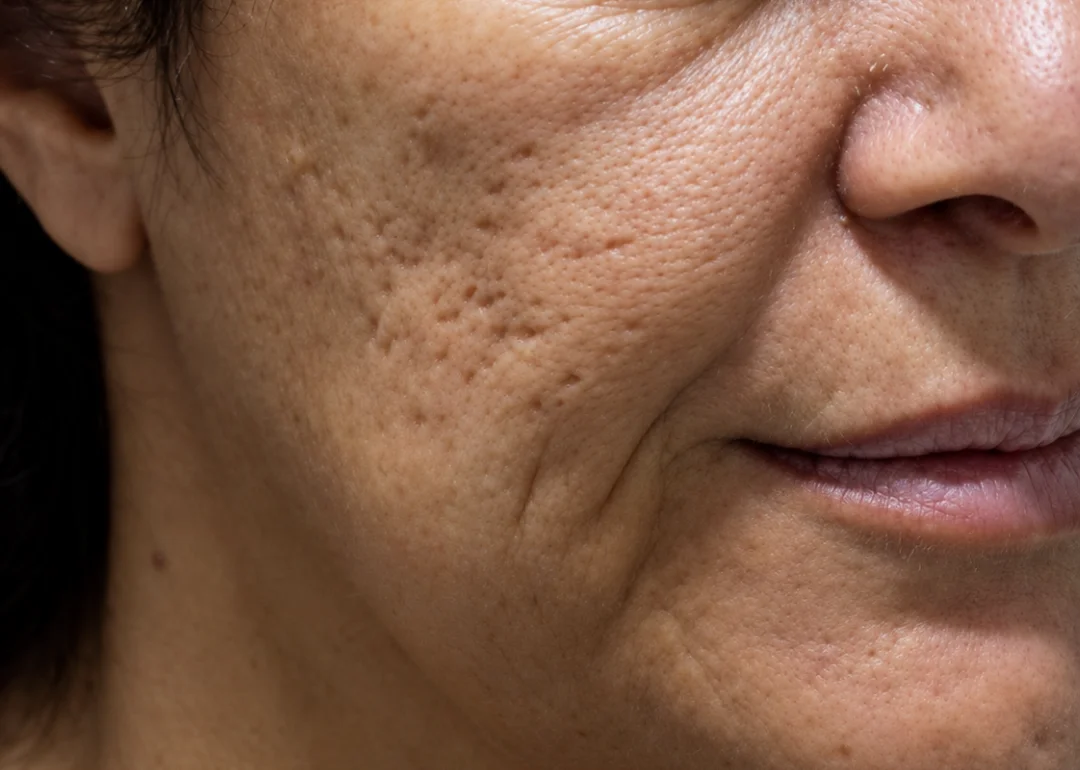
Before
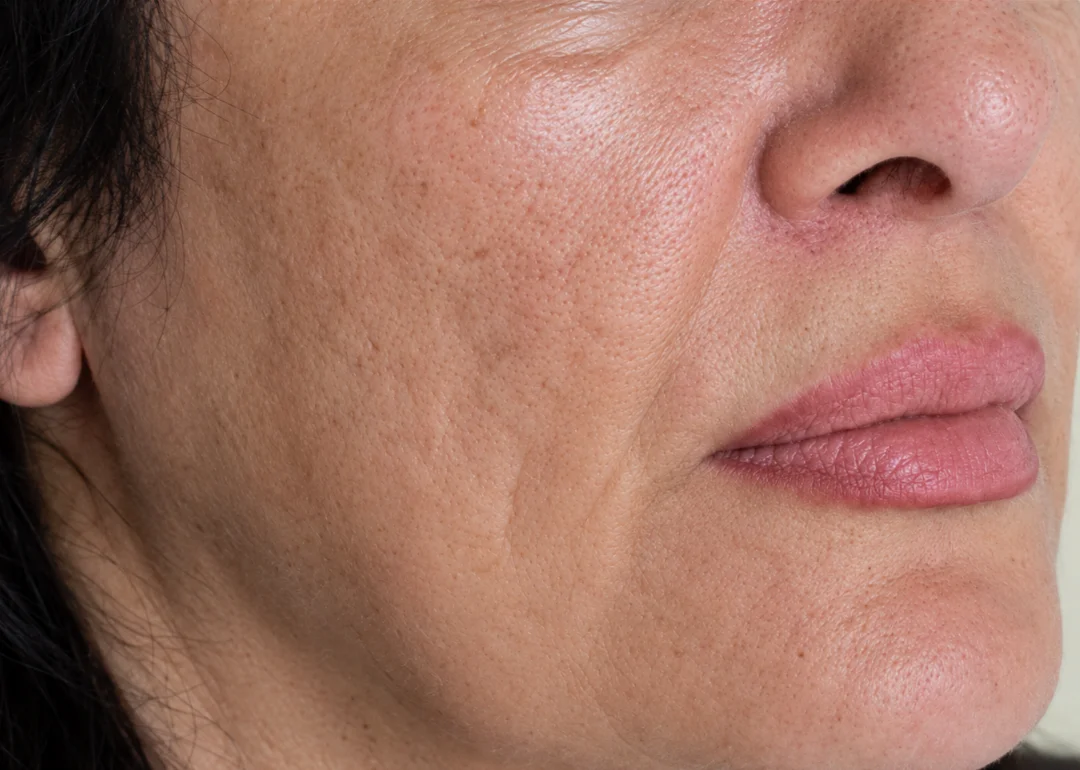
After
Who Is Suitable for Combo Lift?
There's no particular age when someone needs to start Combo Lift.
Some patients come in their thirties because they've noticed early changes in texture or firmness. Others come much later, when those changes are more established. We also see people who aren't especially concerned about ageing but want help with scars or uneven skin.
And then there are patients who simply want to take better care of their skin.
Ageing is natural, and we don't believe every sign of it needs correcting. But if something about your skin bothers you, there may be ways to improve it.
For patients who come back regularly, the aim isn't always to correct something new. Sometimes it's about maintaining the improvements they've already seen. We look at how the skin has changed since the previous visit and decide whether another treatment would be useful. An annual review can be a practical way to do this, although not everyone will need treatment every year.
We don't describe Combo Lift as a way to stop ageing. It can't do that. And there isn't enough evidence to say that repeating this particular combination every year will slow the ageing process itself.
Of course, not everyone is suitable. Active skin infections, certain skin conditions, recent tanning, some medications and a history of unusual scarring may affect what we can safely do.
Sometimes the best decision is to postpone treatment. Sometimes it's to choose something else entirely.
Treatment Areas
We use Combo Lift most often on the face, particularly the cheeks, lower face and areas where fine lines or uneven texture are noticeable.
The neck and décolletage are also common requests. People spend a lot of time caring for their faces and sometimes forget that the skin below the chin is exposed to many of the same things, especially sunlight.
Body treatments are possible too. We sometimes treat loose or uneven skin above the knees, on the inner thighs or around areas affected by stretch marks.
But we don't treat every area in the same way.
The neck, for example, needs a different approach from the cheeks. Its skin is thinner and more delicate, so we have to be particularly careful with treatment depth and intensity.
And not every concern on the body will respond well enough to justify treatment. We'll tell you when we think the likely improvement may be limited.
Why We Usually Plan It in Autumn and Winter
We tend to do more of these treatments during autumn and winter, especially when fractional laser is involved, because managing sun exposure is often easier during the cooler months.
After laser resurfacing, the skin needs time to heal and can be more vulnerable to pigmentation changes. Avoiding strong sun exposure is an important part of recovery.
It doesn't mean winter makes laser treatment risk-free. You still need proper sun protection, and we still need to consider your skin type and daily routine.
If you're planning a summer holiday, wedding or another important event, it's worth coming in well beforehand. Some improvements take time to develop, and stronger laser treatments can involve more recovery than people expect.
We'd rather give your skin enough time than rush treatment to meet a date.
What to Expect Before Treatment
At the consultation, we decide together which methods and areas are appropriate for you. Dr. Erten will go through the planned steps, how we keep you comfortable, the possible risks and the recovery you can expect. The methods aren't necessarily performed on the same day; sometimes we stage the treatment to give your skin time to recover.
Preparing for Treatment and Aftercare
It helps if you bring details of your medications, skincare products, previous procedures and any reactions you've had in the past. We'll give you individual advice about skincare, sun exposure and when you can return to your usual activities. If any of your medications might need changing, we'll ask you to discuss this with the doctor who prescribes them.
Before treatment, we'll explain your aftercare, arrange your follow-up and make sure you know whom to contact if anything about your healing worries you. We'll also tell you which changes are expected and which symptoms mean you should get in touch with us promptly. What your skin needs afterwards depends on the procedures we've performed.
When Will We Review Your Results?
When we review your results depends on the methods we've used and how your skin heals. We'll agree on a time for the first review and explain how we'll assess longer-term changes. We only consider further sessions after we've seen how your skin has responded.
Planning a Visit to Ankara
If you're travelling from abroad, please contact us before you book your trip. We'll let you know what information we need for an initial discussion, when an in-person assessment can take place and how treatment and follow-up could fit into your visit. Whether a treatment is suitable for you can only be confirmed after a medical assessment.
We'll also talk about how long you should plan to stay, whether you'll need a review here in Ankara and how follow-up will work after you return home. This depends on the treatment and your recovery, and a single visit may not cover every stage.
Thinking About Combo Lift?
If you're unsure which treatment would suit your skin, a consultation with Dr. Erten can help clarify your options and what each could realistically achieve. A Combo Lift plan may be appropriate, or a simpler treatment may be enough.
If you'd like to discuss your skin concerns, you can get in touch with our clinic in Ankara, Turkey, to arrange a consultation.
Frequently Asked Questions
No. Combo Lift is one of our non-surgical aesthetic approaches.
There's no surgical lifting or removal of excess skin. However, the treatments aren't entirely superficial. Gold needle and mesotherapy involve needles, and fractional laser creates controlled injury in the skin to encourage renewal.
So although surgery isn't involved, these are still medical procedures that require proper planning and aftercare.
Possibly. It depends on what we've included in your treatment.
Gold needle commonly causes some redness, swelling or sensitivity for a few days. If we use fractional CO₂ laser, recovery can be longer. The skin may peel or form small crusts, and visible healing can take around one to two weeks. Redness sometimes lasts longer.
We'll talk through this before treatment. If you have work commitments or an event coming up, we need to know so we can plan accordingly.
Sometimes, yes. Skin-quality treatments may have a place before or after certain aesthetic operations.
But timing is important. Skin in a recently operated area needs to heal properly before we consider applying laser or radiofrequency energy.
Dr. Erten will look at the procedure you've had, or are planning to have, and advise whether Combo Lift would be appropriate.
We can't give everyone the same answer.
Someone with mild texture changes may need a different approach from someone with established acne scars or more noticeable laxity.
We usually discuss an initial plan and then reassess the skin's response. That gives us a better basis for deciding whether further sessions are worthwhile.
Yes, and we think it's important to discuss them openly.
Redness, swelling, tenderness and temporary irritation are fairly common. Depending on the treatment, there can also be bruising, peeling or changes in pigmentation.
Less commonly, laser and radiofrequency treatments can cause burns, infection or scarring. Mesotherapy also carries risks related to injections and the ingredients used, including allergic reactions.
We take your medical history and skin type into account before treatment, and we'll explain what to watch for during recovery.
Author: Dr. Gözde Erten, Plastic, Reconstructive and Aesthetic Surgery Specialist. Updated .