

Our skin is a silent mirror of every moment we live, every emotion we feel, and the passing years. However, erasing deep lines and a tired appearance from it is not just an aesthetic touch—it is a journey of reconciling with oneself and restoring confidence. Today, without undergoing surgical procedures with long recovery times and risks, one of the most effective methods offering noticeable and lasting results in a shorter time is laser wrinkle reduction. In particular, Fractional CO2 laser technology remains a powerful application in medical aesthetics, resurfacing the skin while stimulating biological renewal in deeper layers.
Welcoming patients at her clinic in Turkey, Ankara, Plastic, Reconstructive and Aesthetic Surgeon Op. Dr. Gözde Erten manages this process with a “natural and minimally invasive” treatment philosophy.” Skin rejuvenation should not only focus on eliminating existing wrinkles but also on restoring vitality, elasticity, and overall skin health. All laser treatments performed under the supervision of Op. Dr. Gözde Erten are individually planned based on the patient’s genetic background, lifestyle, and skin type. This process, shaped by scientific ethics and high hygiene standards, provides a safe and comfortable transformation journey.
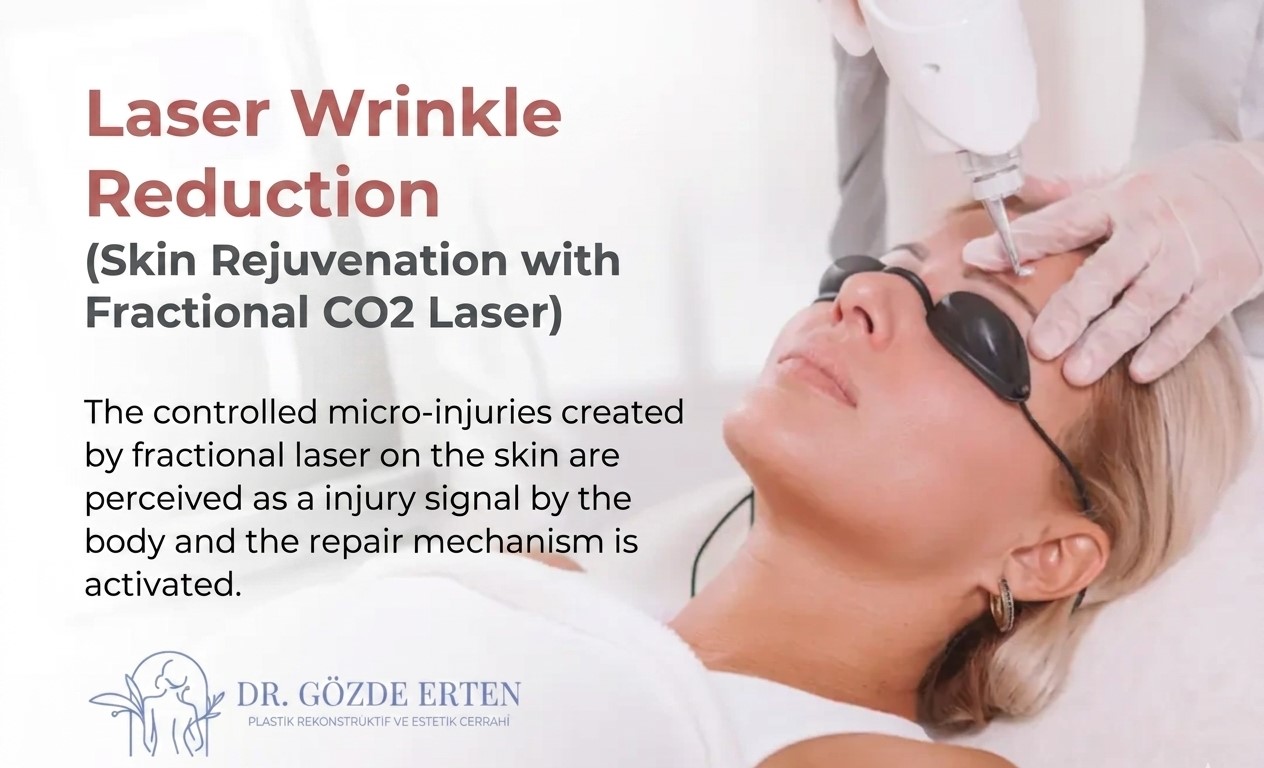
What is laser wrinkle reduction?
This procedure can be defined as the art of slowing down the skin’s biological aging process using the powerful effects of laser technology. Laser beams with a concentrated single wavelength are absorbed by specific targets such as water molecules or collagen fibers beneath the skin and convert this energy into heat within seconds.
The main principle of the procedure is to create a controlled “micro-injury” in the skin. As soon as the body perceives this microscopic stimulus as a signal of injury, it activates all repair and defense mechanisms in that area. This triggers the production of new and healthy tissue. In short, the process stimulates the skin’s natural self-healing ability through an external trigger. In modern medicine, these methods are divided into two main categories:
- Ablative methods: Systems that renew the skin by controlled vaporization of the top layer, offering more radical and faster results.
- Non-ablative methods: Techniques that stimulate collagen production by delivering heat to deeper layers without damaging the skin surface.
Fractional laser technology represents a smart combination of these two approaches. Instead of removing the entire skin surface, it works in microscopic columns, leaving surrounding healthy tissue intact, which significantly accelerates the healing process.
Use of laser in non-surgical skin rejuvenation
For those who wish to avoid surgical procedures, general anesthesia, and long recovery periods, laser technology offers an effective photorejuvenation solution. Damaging effects of sun exposure, environmental pollution, and aging-related collagen loss are revitalized through the thermal impact of laser energy.
The most suitable system for your skin should be determined by a specialist based on your individual needs. The table below summarizes the main technologies used in modern aesthetic treatments and their key differences:
Laser / Energy System |
How It Works |
Key Features and Indications |
Fractional CO2 Laser |
Creates microscopic channels in the skin for deep vaporization. |
Effective for medium to deep wrinkles, acne scars, and skin resurfacing. |
Fractional Erbium YAG |
Rapidly absorbed by water molecules, providing more superficial effects. |
Ideal for mild wrinkles and shorter recovery time. |
Non-Ablative Lasers |
Preserve the surface while heating deeper layers to stimulate collagen. |
Suitable for sensitive areas such as around the eyes and lunchtime procedures. |
Gold Needle (RF Microneedling) |
Delivers radiofrequency energy beneath the skin via micro-needles. |
Protects the skin surface and can be safely used even in summer. |
Ulthera (HIFU) |
Uses focused ultrasound to reach the deepest layer (SMAS). |
Provides a non-surgical facelift effect with long-lasting results. |
Thermage (RF) |
Tightens the skin by heating deep layers with radiofrequency. |
A comfortable single-session treatment for skin laxity and fine lines. |
How is laser wrinkle reduction performed?
Laser treatment is far more than simply moving a device over the skin; it is a medical procedure that requires precision at every stage. At the clinic of Op. Dr. Gözde Erten, the process follows these structured steps:
- Preparation and evaluation: The process begins with a detailed skin analysis. Wrinkle depth, pore structure, and skin type (including tone and sun sensitivity) are carefully assessed. The patient’s medical history, especially any history of herpes (cold sores), is reviewed. If necessary, preventive antiviral treatment may be initiated before the procedure.
- Anesthesia: Patient comfort is essential. A medical-grade topical anesthetic cream is applied to the treatment area approximately 30–45 minutes before the procedure to minimize discomfort caused by heat and laser pulses.
- Laser treatment: Both the physician and patient wear protective eyewear. Op. Dr. Gözde Erten adjusts parameters such as depth, energy level, and pulse duration based on the skin thickness of each area. Cooling systems are used throughout the procedure to maintain skin temperature. The treatment typically lasts between 15 minutes and 1 hour depending on the area.
- Post-procedure: Mild redness and a sunburn-like sensation are normal immediately after treatment and indicate the desired effect has begun. With deeper treatments such as Fractional CO2 laser, a healing phase involving slight crusting may occur, lasting between 3–10 days.
Why should fractional laser wrinkle reduction be preferred?
The secret behind the success of fractional laser treatment lies in its “divide and manage” strategy. While traditional lasers resurface the entire skin in a single pass, fractional technology treats the skin in pixel-like microzones. The untouched “healthy tissue islands” between these zones act as cellular reservoirs, enabling faster and safer healing of the treated areas. Thanks to this advanced approach, the risk of side effects is reduced while the quality and longevity of the results are significantly improved.
Effect of fractional CO2 laser on collagen production
Fractional CO2 laser (10,600 nm) is one of the most powerful tools in modern aesthetic medicine. Due to its high absorption by water, this specific wavelength initiates a strong regeneration process both on the skin surface and within the dermis layer.
- Biological stimulation: The thermal energy generated by the laser is perceived by the body as a “repair signal.” This activates fibroblast cells, which are responsible for collagen production, at maximum capacity.
- Collagen remodeling: Existing loose collagen fibers contract immediately under heat, creating a tightening effect. However, the real transformation occurs in the following weeks as the body produces new, well-structured, and high-quality collagen.
- Long-lasting rejuvenation: The increase in collagen achieved with this method improves the skin not only superficially but also structurally. The refreshed appearance from a single session can last between 3 to 5 years, depending on lifestyle factors.
Differences between fractional laser and other laser methods
The choice between laser technologies depends on the type of result you want to achieve. Do you need rapid and intensive skin renewal, or gradual improvement without interrupting your daily life?
Traditional (fully ablative) lasers: These are the most aggressive techniques that completely remove the top layer of the skin. They can deliver dramatic results for deep scars and severe sun damage, but the recovery period (1–2 weeks) is longer, and the risk of complications is higher. Today, they have largely been replaced by safer fractional systems.
Non-ablative lasers: These heat the deeper layers of the skin without damaging the surface. Known as “lunchtime procedures,” redness usually subsides within hours. However, their effectiveness on deep wrinkles is limited, and visible results often require 5–6 sessions.
Fractional lasers: These offer a balanced combination of both approaches. They improve skin texture (pores, pigmentation) externally while also filling deeper wrinkles from the inside out. Recovery time is moderate (3–7 days), and the risk profile is relatively low.
Feature |
Traditional Laser |
Non-Ablative Laser |
Fractional Laser |
Skin Surface |
Fully resurfaced |
No surface damage |
Micro-channels created |
Recovery Time |
10–14 Days |
None |
3–7 Days |
Number of Sessions |
Single session |
3–6 sessions |
1–3 sessions |
Risk Factor |
High |
Very Low |
Low |
How does laser treatment remove eye wrinkles?
The eye area is one of the first regions to show signs of aging and fatigue. The skin here is 5–10 times thinner than in other parts of the body. This delicate structure requires high-level expertise and precise technology. Laser treatment is one of the strongest and safest alternatives to eyelid surgery (blepharoplasty), especially for under-eye sagging and crow’s feet wrinkles.
In the eye area, methods that do not significantly damage the skin or provide very controlled resurfacing are preferred. Fractional CO2 laser delivers outstanding results in improving skin laxity in this region. If the patient prefers minimal downtime, gentler non-ablative systems may also be considered.
Before the procedure, special metal eye shields or protective laser goggles are always used to protect the eyeball. The laser precisely targets fine lines under the eyes and crow’s feet. The procedure usually takes about 10 minutes. The tightening effect begins immediately due to heat-induced collagen contraction, but final results appear around the 3rd month when collagen remodeling is fully completed.
Effect of laser on crow’s feet and fine lines
The “crow’s feet” formed by smiling can deepen over time and turn into static wrinkles. Laser treatment creates a dual protective effect:
- Fine lines: For early-stage wrinkles, non-ablative systems (such as Nd:YAG) improve skin quality without damaging the surface. This approach helps slow down the aging process significantly.
- Crow’s feet: For deeper wrinkles, fractional systems directly target collagen loss at the base of the lines. Thermal energy helps push the wrinkle structure from the inside outward, resulting in smoother and tighter skin.
Which areas can be treated with fractional laser skin rejuvenation?
The benefits of laser technology are not limited to the face. It is widely used on the neck, décolleté, and hands—areas where aging signs are most visible.
Wrinkle reduction treatment for face, neck, and décolleté
Face: The face is the most exposed area to sun damage and acne scars. Fractional laser reduces wrinkles and improves skin tone irregularities (laser pigmentation treatment), providing a porcelain-like rejuvenation effect.
Neck and décolleté: The skin in these areas is thin and has fewer oil glands, so recovery is slightly slower compared to the face. Op. Dr. Gözde Erten carefully adjusts energy levels and schedules sessions to achieve safe and aesthetic results in these sensitive areas.
Laser treatment for upper lip wrinkles (barcode lines)
These vertical lines, commonly called “barcode lines,” often develop due to smoking or repetitive facial expressions. They are among the most resistant wrinkle types. The upper lip skin requires stronger and more precise laser settings. Fractional CO2 laser can be used alone or combined with dermal filler treatments. This hybrid approach fills deeper lines while improving skin quality for a fresher appearance.
Recovery process after laser wrinkle reduction
The recovery phase is a critical part of the treatment because new skin is formed during this period. Modern fractional laser systems provide a much more comfortable healing experience.
- Immediately after treatment (first 24 hours): Warmth and mild sunburn-like sensation are normal. Redness and swelling may be visible. The skin should not be touched, and only prescribed sterile moisturizers should be used.
- First week (crusting and peeling phase): Tiny brown dots (fibrin plugs) may appear, indicating skin renewal underneath. From day 4 onward, mild peeling begins. It is crucial not to pick or remove the crusts manually.
- Intermediate phase (week 2–6): After peeling, fresh pink skin emerges. This is a sign of active healing and gradually returns to normal skin tone.
- Long-term healing (3–6 months): Although externally healed, collagen production continues internally. From the 3rd month, skin tightening and wrinkle reduction become clearly visible.
Post-treatment care and important precautions
Remember, treatment success is 50% clinic procedure and 50% home care discipline.
- Sun protection: Use SPF 50+ sunscreen for at least one month and avoid direct sunlight.
- Intensive hydration: Products containing ceramides and hyaluronic acid help restore the skin barrier.
- Avoid mechanical irritation: No scrubs, peeling, or harsh cleansing tools during the first week.
Recommended creams and sun protection after the procedure
The right skincare routine can accelerate healing by up to 30%.
- Repair creams and ointments: Vaseline-based or zinc-containing products protect the skin during the first 3 days.
- Moisturizers: After peeling, hyaluronic acid and squalane-based products should be used.
- Sunscreen: Mineral-based SPF protection should be used even indoors due to UV exposure through windows.
- Active skincare (under doctor supervision): After full healing (4–6 weeks), vitamin C or peptide serums can be added to enhance results.
Laser wrinkle reduction prices in Turkey, Ankara and session costs
Turkey, Ankara laser wrinkle reduction costs vary depending on technology, device quality, and physician expertise.
However, average prices are generally as follows.
| Country | Average Cost per session | Typical Package Range |
|---|---|---|
| Turkey | $150 – $600 (€140 – €550) | $500 – $1,500 |
| UK | £500 – £1000 | £1000 – £3,500 |
| USA | $800 – $2,500 | $1,500 – $6,000+ |
| Germany | €700 – €1,500 | €1,500 – €4,500 |
Factors affecting laser skin rejuvenation prices
Main factors influencing laser wrinkle reduction treatment prices in Turkey, Ankara:
- Device technology: FDA-approved systems have higher maintenance costs but provide superior safety and results.
- Treatment area: Full face, neck, and décolleté treatments require more time and energy than localized areas.
- Physician expertise: Laser treatments require advanced anatomical knowledge. Performed by experts like Op. Dr. Gözde Erten, risks are minimized.
- Clinic standards: Sterilization quality, supporting products, and follow-up care all affect treatment quality.
For more information about Fractional CO2 laser wrinkle reduction and skin rejuvenation prices, please contact us.
Frequently Asked Questions About Laser Wrinkle Reduction
Since laser treatment physically improves the structural components of the skin, the results are long-lasting. However, the human body is a living organism and the aging process cannot be stopped; it can only be slowed down. The results achieved with fractional CO2 laser generally maintain their effect for 3–5 years. Proper nutrition and consistent sun protection can significantly extend this duration.
This depends entirely on the depth of the wrinkles and the skin’s response rate. With fractional CO2 laser, a single session can often deliver highly satisfying results; however, in lighter systems or more established wrinkles, a 3-session protocol may provide a more long-lasting solution.
In modern aesthetic medicine, time is as valuable as results. The return-to-work period after laser treatment depends on how deep a regeneration process the chosen technology creates in the skin.
With fractional CO2 laser, which provides deeper and more permanent skin renewal, the healing process requires a bit more patience. Depending on the individual, swelling and crusting may take 7–10 days to fully subside. For social comfort, it is generally recommended to allow around 2 weeks, especially during the mild redness (erythema) phase, which can be managed with makeup. Although full skin tone normalization may take 1–3 months, most patients can comfortably return to work after 14 days.
Thanks to advanced technology, the idea that “beauty requires pain” is no longer valid. A multi-layered pain management protocol is used to ensure maximum comfort during the procedure. With topical anesthetic creams and cooling systems, pain is minimized.
Most patients describe the sensation as a mild and tolerable tingling, so there is no need for concern.
In laser treatments, age is not just a number; it is a guide to understanding the skin’s biological capacity. Treatment plans are structured according to age groups as follows:
- 20s (preventive care): Focus is on preventing future damage, minimizing pores, and improving skin texture while boosting collagen reserves.
- 30s (early intervention): Fine expression lines begin to appear. Fractional laser revitalizes the skin and reduces early signs of aging.
- 40s (restorative phase): Fractional CO2 laser effectively targets deeper wrinkles and pigmentation while improving overall skin quality in a single session.
- 50s and above (intensive rejuvenation): Skin laxity becomes more prominent. Laser significantly improves skin quality, and in more advanced cases, it can be combined with surgical procedures such as eyelid surgery or mini facelift for comprehensive rejuvenation. Healing should be closely monitored by a specialist.