

What do I Need to Know about Otoplasty in Turkey?Ankara Aesthetics Clinic
What questions should I ask my plastic surgeon about otoplasty?
The moment of meeting with your surgeon is the right time to ask questions of your plastic surgeon. To help you out, we've prepared a list of questions you can ask your plastic surgeon and take with you to your ear surgery consultation.
You can use this checklist as a guide during your consultation with your physician for otoplasty.
- Which organisation are you certified for?
- Which organisation or organisations are you a member of in the field of plastic surgery?
- How many years have you been operating in the field of otoplasty?
- Which local or foreign institutions is your clinic accredited with?
- Where and how will you do my operation?
- What shape, size, surface texture, incision and insertion sites are recommended for me?
- How long will my recovery period last, and what kind of help will I need during it?
- What are the risks and complications associated with this procedure?
- If so, how will I handle complications?
- What are my options if I am not satisfied with the outcome of my ear surgery?
- Do you have before and after photos of the operation that I can look at?
What can I ask my surgeon after otoplasty?
- Where will I be taken after my surgery is completed?
- What medications will I be given or prescribed after the surgery?
- Will there be dressings/bandages after the surgery? When will they be removed?
- Will stitches be removed? When?
- When can I resume normal activity and exercise?
- When will I be back for follow-up care?
What type of anaesthesia is used for otoplasty?
Complex reconstructive otoplasty procedures and minor surgeries to correct injuries or other deformities may require general anaesthesia. Local anaesthesia is usually sufficient for the surgery of adults.
Is it worth getting otoplasty?
Many people who have had ear surgery feel it was well worth it. The operation got the 'Most Worth the Cost' award in a 2020 review conducted by a private plastic surgery organisation in the United States. The majority of those who felt it was worth the money claimed it boosted their self-confidence after years of shame due to big ears, asymmetries, or abnormalities.
Can I make my ears smaller with surgery?
According to plastic surgeons, most people do not have abnormally big ears. Because the ears protrude, they appear to be rather enormous. However, the ear can be abnormally big in relation to the skull at times. In this scenario, the ear can be decreased using a procedure known as wedge resection. The most visible consequence of this procedure is a scar on the exterior.
Is there an alternative procedure to ear aesthetic surgery?
If you wish to correct prominent ears with a less intrusive (and less surgical) procedure, the Earfold, a tiny implant implanted with local anaesthesia, may be explored. It is implanted beneath the skin in the upper ear cartilage to permanently correct the slightly projecting prominent ears. This little implant can repair large ears and is a less expensive alternative to ear surgery. While earfold outcomes are not as successful as otoplasty, many patients who have had this treatment believe it is well worth the money.
Am I too old for otoplasty?
You may believe that it is too late or that it is no longer worthwhile. However, there is no age limit for ear correction surgery as long as you are fit and healthy. You can meet with and be checked by an expert plastic surgeon to determine your appropriateness for otoplasty.
Will otoplasty affect my hearing?
Your hearing will not be affected by otoplasty. The ear is divided into three sections. The pinna is the ear's outer rim. The middle ear is located beyond the eardrum, while the inner ear is located deeper. Only the auricle portion of the ear is impacted during ear correction surgery. Following surgery, you will need to wear ear wraps. This may cause a little reduction in your hearing. However, after the bandage is removed, your hearing will return to normal.
When can I wash my hair after the surgery?
After ear correction surgery, you will need to wear bandages and dressings for a few days. You will be unable to wash your hair throughout this period. After your doctor has cleared you to remove these bandages, you may wash your hair. However, you must use caution during the initial washes. Keep your cool and try it for the first time.
Is ear surgery permanent?
Yes, ear corrective surgery is usually permanent. There is no reason for your ears to revert to their former state as long as you pay attention during the healing process.
Is there a difference between otoplasty and pinnaplasty?
Otoplasty and pinnaplasty are the same procedure. The projecting section of the ear on the exterior of the head is known as the pinna. When paired with additional terms like 'ology' or 'plasty', 'auto' denotes an ear or ear procedure.
When is the best time to get otoplasty?
Otoplasty is a simple and safe treatment that can be performed at any age, as long as the ears are completely grown. This normally happens around the age of five, which is why the majority of ear pinning operations are done between the ages of five and seven.
Can you wear headphones after otoplasty?
The majority of patients require 1-2 weeks to recuperate following otoplasty. Some swelling/bruising may occur during the third week following surgery, but you should be able to see your new ears at this time. Wearing headphones during rehabilitation is one example of an activity that should be avoided.
How can I sleep with otoplasty?
For at least the first week following surgery, you should sleep with your head raised in a chair or with at least two pillows. For around two weeks, try not to sleep on the side of your face and instead sleep with the back of your head on the pillow. For comfort, some patients prefer an airplane pillow.
How long after otoplasty can I wear glasses?
Because the incision line behind the ear extends all the way to the top, there may be some discomfort in the first few weeks. Most otoplasty patients, however, may resume regular use of their glasses within 2-3 weeks following the procedure.
How many hours does ear surgery take?
Depending on the kind of surgery and the patient's situation, ear surgery might take varied periods of time. Most of the time, simple earlobe repairs can be done in 30 to 60 minutes. However, cochlear implant surgery or reconstructive microtia surgery, which are more difficult, can take several hours.
It's vital to keep in mind that each patient is unique and that the length of the treatment doesn't always imply how hard or risky it is. During your meeting, your surgeon will be able to give you a clearer idea of how long your ear surgery will take.
What is the success rate of ear surgery?
The success rate of ear surgery may vary depending on the treatment performed and the individual characteristics of the patient. Most people who have ear surgery, such as otoplasty and earlobe repair, do well. These procedures are regarded as having a high success rate.
The surgeon's training and experience, the patient's overall health, and how well they follow pre- and post-op instructions can also affect the success rate. Patients can improve their chances of a successful outcome by carefully choosing a skilled and experienced surgeon, following all of their healthcare team's advice, and staying healthy before and after the surgery.
What are the risks of otoplasty? How risky is ear surgery?
Otoplasty is a safe and efficient treatment for big or projecting ears. However, like with any surgical operation, problems such as haemorrhage, infection, aberrant contouring, over-correction, under-correction, and exposed sutures can occur.
There may be some risks or complications after plastic surgery, depending on the patient and the physician. These can be completely avoided or reduced with the measures to be taken. Ear surgery is generally a risk-free operation. However, the following risks may occur in rare cases.
Possible complications of ear surgery are as follows:
- Allergies to tape, sutures, adhesives, blood products, topical preparations or injected substances.
- Asymmetry (difference in shape or position between both ears)
- The need for a second surgery (revision)
- Skin discolouration/swelling
- Bleeding (haematoma)
- Pain or aches
Otoplasty before and after in Turkey, Ankara
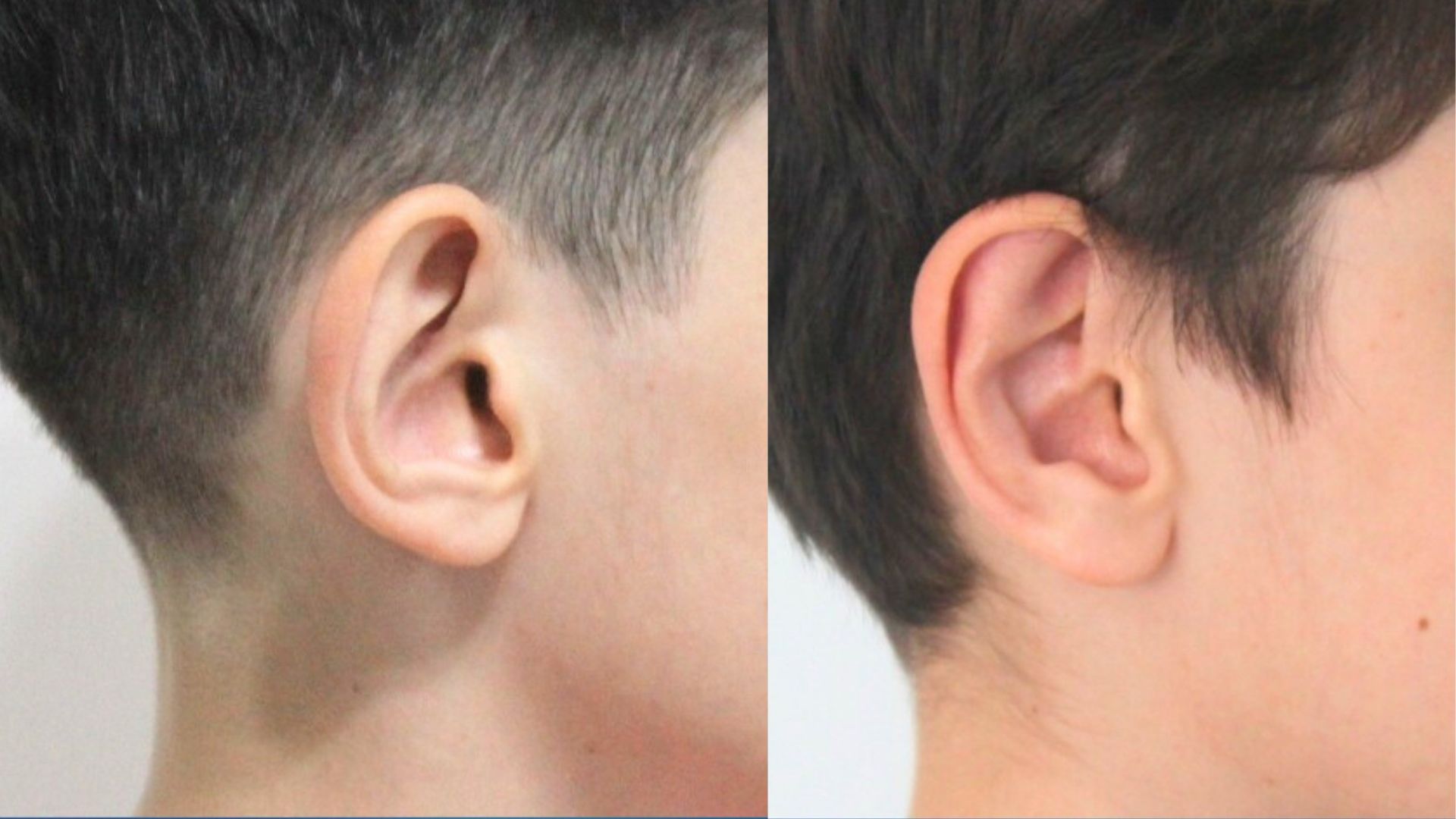
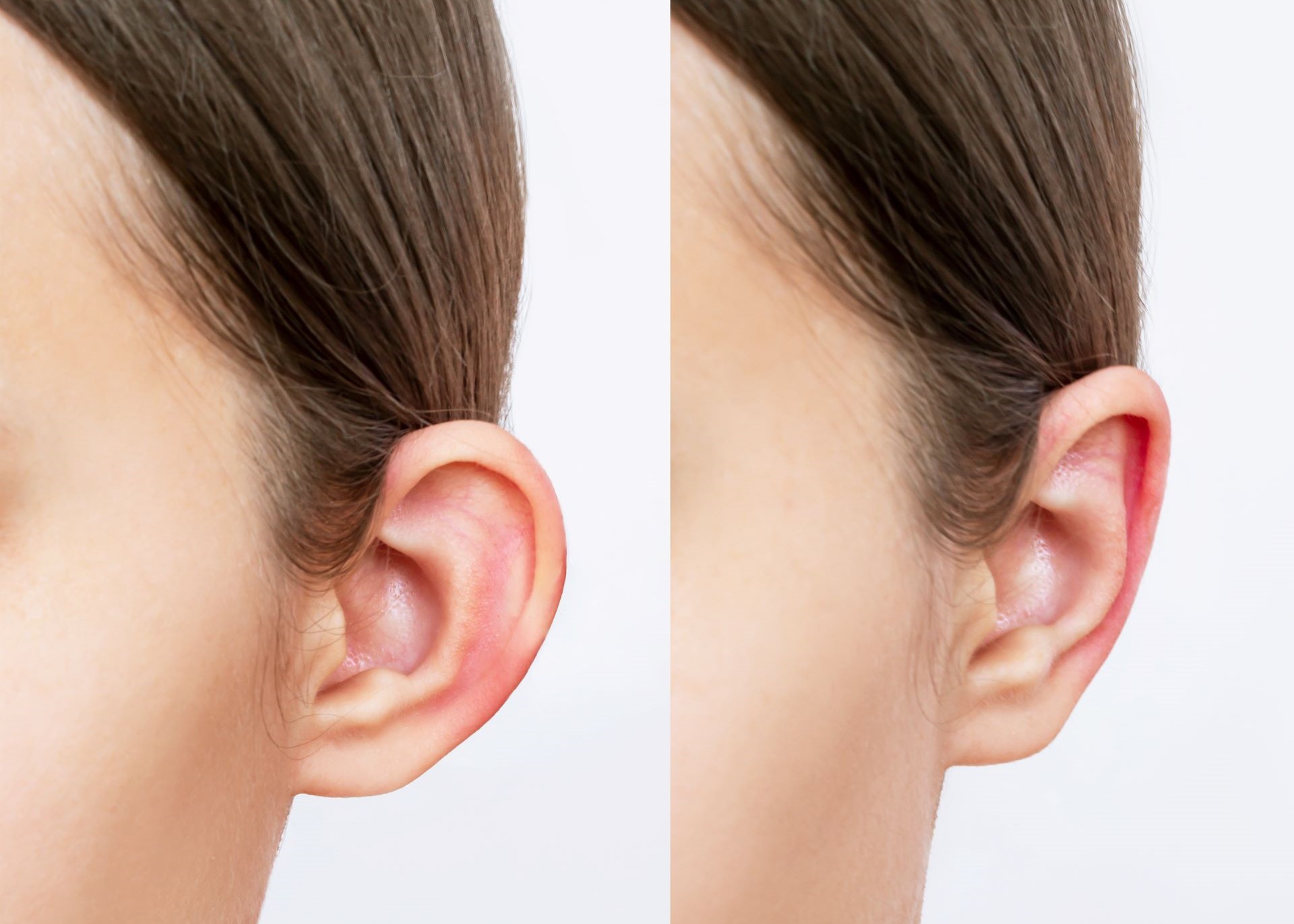
Otoplasty (Ear correction surgery) in Ankara, Turkey
If prominent ears make you feel uncomfortable, the solution is easier than you think! With otoplasty, you can reshape your ears for a more balanced and aesthetic appearance. This procedure is suitable for all ages, has a quick recovery process, and provides natural results. Give yourself the chance for a fresh start!
The exact methods used during otoplasty may vary depending on the patient's needs and the surgeon's preferences. The patient is usually given either local anaesthesia with sedation or general anaesthesia. The surgeon will make a few small cuts behind or in the folds of the ear to access the cartilage and then replace it to improve the ear's look. This may mean modifying the shape of pre-existing cartilage, adding or removing cartilage, or both. The surgeon will close the cuts and use stitches to hold the cartilage in its new location. These stitches may dissolve on their own, or they may need to be taken out later. The surgeon will apply a bandage or bandage to keep the ear safe and in place until it heals.
Please contact us for detailed information or to schedule a consultation at Gozde Erten Aesthetics Clinic.