

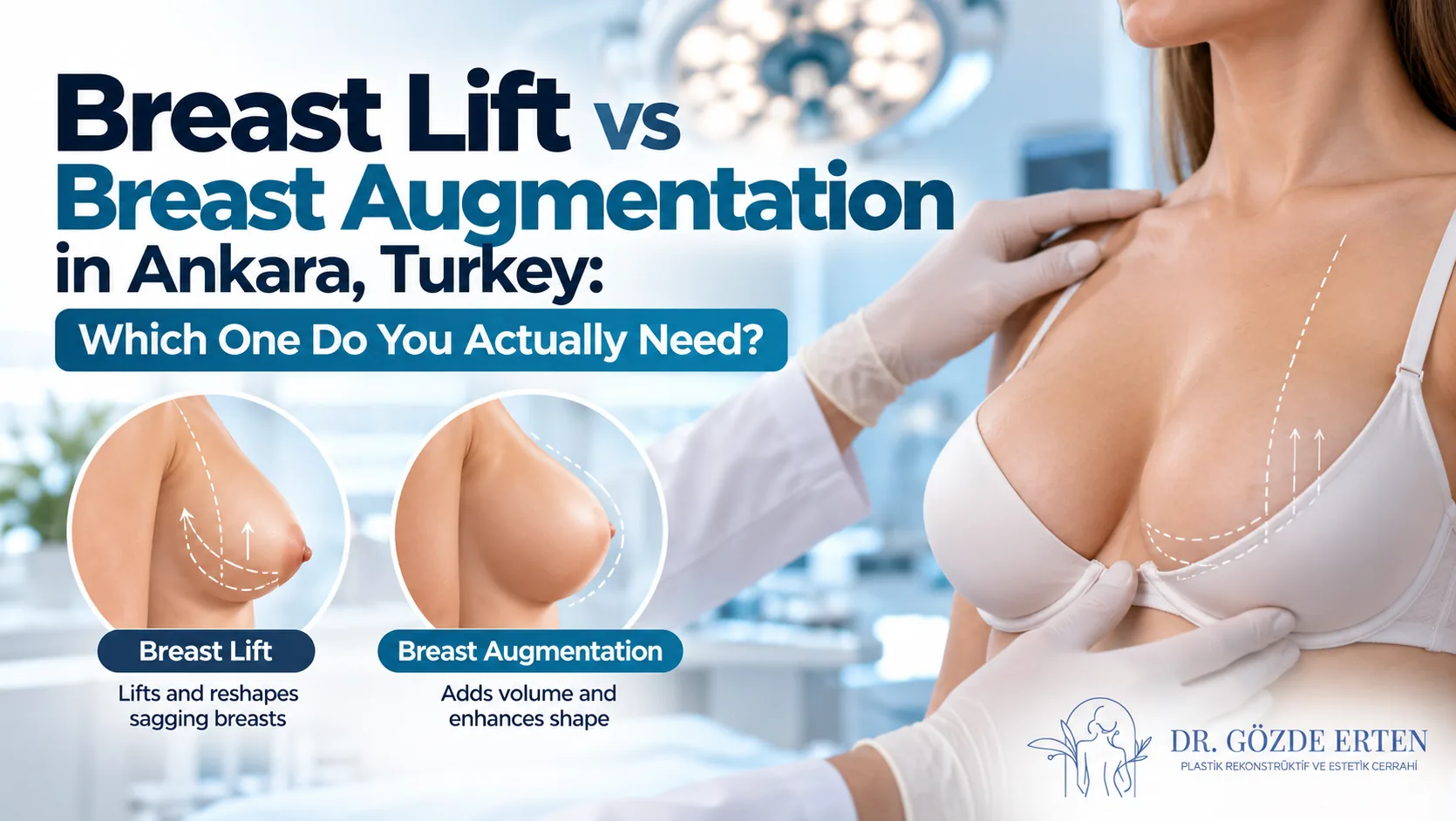
Here's something we hear almost every week: "I think I just need implants." Sometimes that's exactly right. But just as often, when we look a little closer, size isn't really the issue. The breasts have dropped. The nipples point down instead of forward. The skin feels looser than it used to, maybe after a baby or after losing a lot of weight.
Implants won't fix any of that on their own. And that's where the confusion between a breast lift and breast augmentation usually starts. They sound similar, they're often mentioned together, but they do very different jobs. So let's clear it up.
What a Breast Lift Does
A breast lift (doctors call it mastopexy) is about shape and position, not size. The surgeon removes the extra skin, tightens what's left and moves the nipple and areola back up to where they used to sit. If the areolas have stretched over the years, they can be made smaller at the same time.
One thing that surprises people: a lift doesn't make your breasts bigger. Some women even feel they look a touch smaller afterwards, simply because the loose skin is gone. But they sit higher, look firmer and fit into clothes differently. If you like your cup size and just miss the way your breasts used to look, this is probably the surgery you're thinking of.
What Breast Augmentation Does
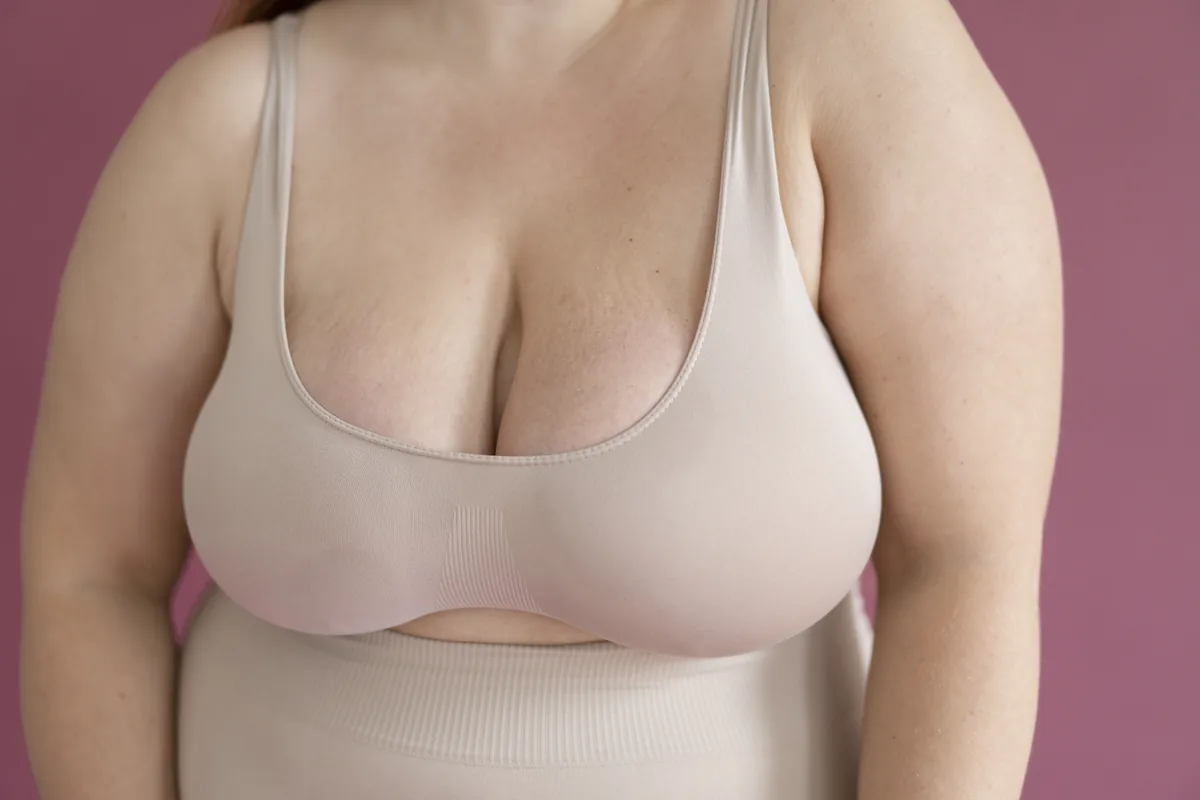
Breast augmentation is the one that adds volume. In most cases this means silicone implants. It's a great option if your breasts have always been small, if one side is noticeably different from the other, or if you've lost that fullness at the top of the breast after breastfeeding.
What it can't really do is correct sagging. With very mild drooping, an implant might give a slight lift. But if the breast has dropped a lot, putting an implant behind it can make things look odd. The implant sits up high where it's supposed to be, and the natural breast tissue hangs below it. It's not the look anyone is after.
Is it possible to correct breast sagging with only implants?
When Implants Alone May Be Suitable
When the breast deformity is not severe, implants alone can be a quick and effective way to restore fullness. Where there is a lot of excess skin or the nipple needs to be moved higher, a lift is the better choice. An examination is needed to determine which approach is suitable.
If you're leaning towards implants, our article on the benefits and risks of breast augmentation is a good next read.
How to Tell Which One You Need
You'll only get a definite answer from an examination. Still, there are a few signs you can check for yourself at home, in front of a mirror.
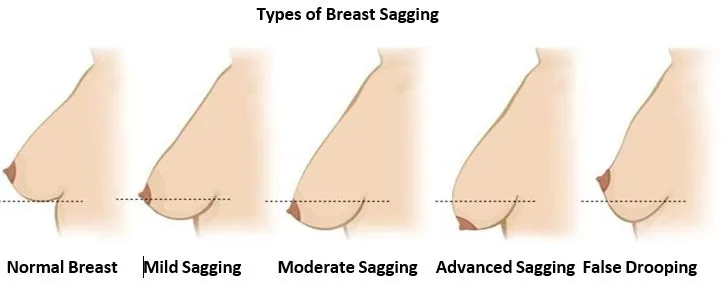
You may need a breast lift if:
- Your nipples sit at the level of the fold under your breast, or lower
- They point towards the floor rather than straight ahead
- Part of your breast hangs below that fold
- Your areolas look bigger or more stretched than they used to
- Honestly, you're fine with the size. It's the shape that bothers you
Breast augmentation may be enough if:
- Your nipples are still above the fold
- Your breasts feel firm but you'd like them bigger
- The top part of the breast looks flat or empty
- One breast is clearly smaller than the other
Ticking boxes in both lists? You're not alone. Plenty of women do, and that's usually a sign the answer is a mix of the two.
When a Breast Lift with Implants Makes Sense
A breast lift with implants, or augmentation mastopexy, does both things in one operation. The breast is lifted and reshaped, and an implant goes in to bring back the volume.
We see this most after pregnancy, breastfeeding or big weight loss, because those are the moments when breasts lose volume and drop at the same time. Fix only one of those and the other tends to stand out even more. A lift on its own can leave the top of the breast looking a bit empty. Implants on their own might not sit well on a breast that's already low.
Combining the procedures can mean one anaesthetic and one recovery period. It is a more complex operation, however, and wound healing and the blood supply to the skin and nipple need careful consideration. A staged approach may be recommended for some patients. Whether that's the case for you depends on your skin, how much lifting is needed and the implant size you have in mind. We go through all of this properly at your consultation.
Scars: What to Expect
This is where the two surgeries really differ, and it's better to know before you decide.
With augmentation, an incision is often placed in the crease under each breast, although the location depends on the technique. Scars are permanent. They may become less noticeable as they heal, but their appearance varies from person to person.
A lift needs more incisions, because skin is removed and the nipple has to be moved. Depending on the technique, the scar can go around the areola, run straight down to the crease, or follow the crease as well. Scars may initially look red, pink or darker than the surrounding skin. They often soften and fade over twelve to eighteen months or longer, but remain permanent. Some may stay raised, widened or more visible.
Recovery for Each Procedure
Recovery after augmentation depends on the surgical technique, implant placement, your health and the demands of your job. Some patients return to desk work after about one to two weeks, while others need longer. Heavy lifting and strenuous exercise are commonly restricted for around six weeks, but your surgeon will advise when you can resume them and which sleeping positions are suitable. Swelling and implant position can continue to change over the following months.
After a lift, with or without implants, you may also need around one to two weeks off desk work, and longer for physically demanding work. A surgical bra may be recommended for several weeks, and strenuous exercise is often restricted for around six weeks. Recovery is not necessarily longer than after augmentation alone; it depends on the extent of surgery and how you heal. These are approximate timelines, and your surgeon's instructions should guide your return to activities. If you want the full picture, our breast lift aftercare guide covers it week by week.

Risks and Long-Term Follow-Up
Both procedures carry risks, including bleeding, infection, changes in nipple or breast sensation, asymmetry, wound-healing problems and complications related to anaesthesia. A lift can also affect nipple blood supply and the ability to breastfeed. Your surgeon will discuss how your health, smoking and the planned technique affect these risks.
Implants add specific risks, including capsular contracture (tightening of scar tissue around the implant), rupture and displacement. Rare cancers associated with the tissue or fluid around breast implants, including BIA-ALCL, should also be discussed during informed consent.
Breast implants are not lifetime devices. Regular follow-up is important, and further surgery to remove or replace them may be needed. If you choose silicone implants, ask about imaging to check for a rupture that may not cause symptoms. The follow-up plan depends on the implant, local guidance and your surgeon's advice. New swelling, a lump, persistent pain or a change in breast shape should be assessed.
A Few Things to Think About Before You Decide
Thinking about having more children? It might be worth holding off. Pregnancy and breastfeeding can change your breasts all over again, and that's especially true after a lift.
Weight is the other big one. Try to be at a weight you're comfortable with and can keep before surgery. Big ups and downs later on can undo some of the result, whichever procedure you choose.
And it helps to know what causes sagging in the first place. Age, gravity, genes, smoking and hormones all play a part. Surgery can turn back the clock, but it can't stop it. Results can last for years, but their duration varies and further surgery may be needed.
Breast Lift and Breast Augmentation in Ankara with Op. Dr. Gözde Erten
Every breast surgery at our Ankara clinic starts with a conversation, not a sales pitch. Op. Dr. Gözde Erten will examine you, ask what you'd like to change and tell you plainly which option is likely to get you there. If you came in wanting implants but a lift would serve you better, she'll say so. If you only need a small change, she won't suggest a bigger operation.
Still have questions? Our breast lift FAQs might cover them. Or just get in touch and book a consultation. It's much easier to talk it through in person.
Frequently Asked Questions
Only to a limited extent, and only when sagging is very mild. Implants can restore fullness, but they cannot remove excess skin or move the nipple higher. If your nipples sit at or below the fold under your breast, a breast lift is usually needed.
A lift mainly removes excess skin and reshapes the breast rather than reducing its size. Your breasts may look or measure slightly smaller afterwards, even if little breast tissue is removed. They may also look fuller because of their higher position. If you want a substantial reduction in size, breast reduction may be more suitable.
A breast lift with implants may be suitable for selected patients after an examination and review of their health. Combining the procedures is more complex and requires careful planning because of risks such as wound-healing problems and changes to the blood supply of the skin or nipple. Some patients are better suited to two separate operations. Your surgeon will explain the options and individual risks.
Results can last for many years, but ageing, pregnancy and weight changes can alter breast shape over time. Maintaining a stable weight and avoiding smoking may help preserve the result. Implants are not lifetime devices: follow-up is needed, and further surgery may be necessary because of complications or changes in your preferences.
This article is for general information only and doesn't replace a medical consultation. Suitability and results vary from person to person.
Author: Op. Dr. Gözde Erten, Plastic, Reconstructive and Aesthetic Surgery Specialist. Last updated: .